Why Dive Resorts Need a Brand, Not Just a Logo
Malapascua is the only place on earth where thresher sharks arrive on schedule, yet every resort sells the same promise. Here's how to break the cycle.
# Why Dive Resorts Need a Brand, Not Just a Logo
Malapascua in the Philippines is a tiny island with one asset nobody else on the planet can copy: thresher sharks that show up before dawn, every day, on a reliable schedule. It is the only place you can count on seeing them. And yet, walk the beach and read the signs, and you would struggle to tell one dive resort from the next.
That is the whole problem in one image. A logo is a symbol on a sign. A brand is the reason a diver chooses your sign over the one twenty metres away, and pays for the privilege. Most dive resorts only ever build the first, and that is where dive resort branding starts to matter.
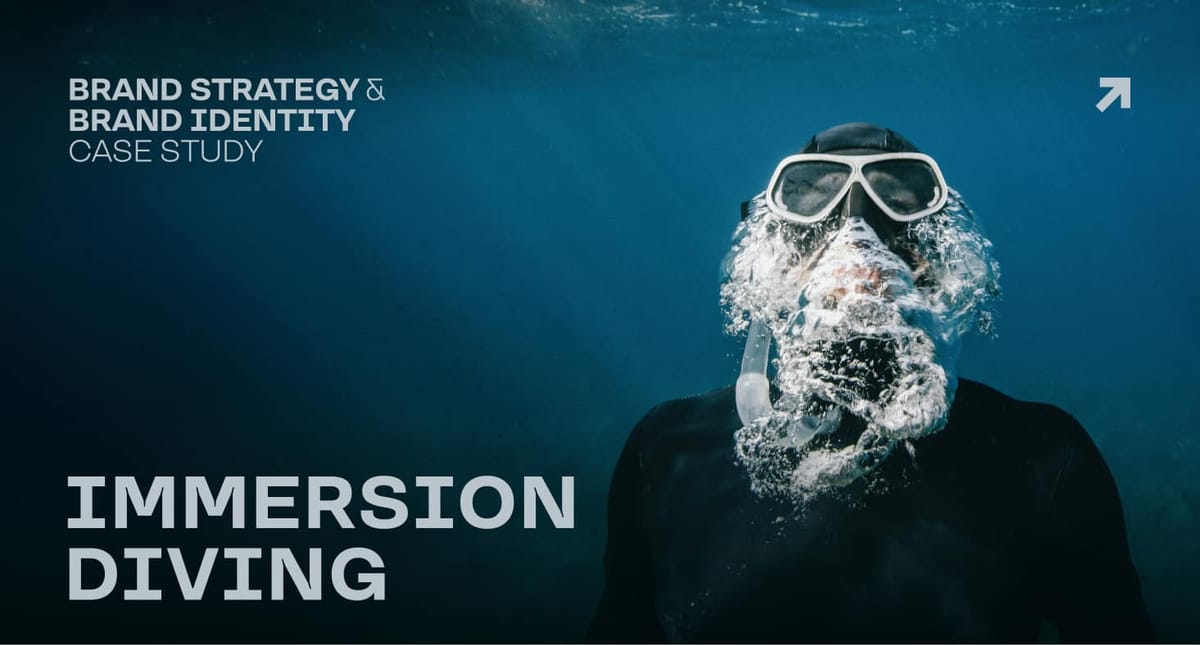
This piece is for resort owners, operators, and the marketing people who work for them. If you run a dive business that competes on price and proximity alone, this is about the change that actually moves occupancy. We branded a club and resort on Malapascua, Immersion, and the patterns we saw there apply to every beach resort trying to stand out.
The thresher-shark differentiation problem
Malapascua gets a steady stream of divers because of one animal. That demand is essentially free. Every resort shares the same reef, the same boats, the same instructors, and the same dawn trip. So the differentiation has to come from somewhere else, and almost nobody builds it.
During our research at Immersion, the focus groups kept throwing up the same thing. Ask a diver why they chose their resort and you get logistics: safety record, gear, staff-to-guest ratios, dive times. Ask them why they came to Malapascua at all and the answer is emotional. Discovery. The feeling of being somewhere underwater that looks like another planet. That word, discovery, came up again and again.
Here is the trap. The logistics answer looks rational, so resorts compete on it with identical promises. Every single sign on that beach says quality experience, professional team, great diving. Nobody disbelieves it. Nobody is moved by it either. When all ten of you promise the same thing, the only thing left to compete on is price, and price is a race nobody wins in a seasonal, remote, instruction-heavy business.
A logo does none of the work a brand does
Think about what a logo actually delivers. It says the name, once, at the top of a page or above a door. Useful for recognition, useless for preference. A brand, by contrast, does four jobs that a logo cannot touch.
First, it picks a fight. It decides what you stand for and, just as important, what you refuse to be. Immersion chose discovery and the hidden world below, and deliberately turned its back on the postcard-bright, paradise generic look every nearby resort uses.
Second, it becomes the filter for every decision afterwards. When you have a clear brand, you stop asking what to post, what to name a boat, what to put on a shirt. The brand answers those questions for you. Resorts without one make those calls by taste and habit, and the result is the noise we see on every dive beach.
Third, it gives returning guests a way to recognise you beyond geography. Repeat business and word of mouth are how this category actually fills bookings. A memorable position, the kind a diver would repeat to a dive buddy, travels further than a logo in a footer.
Fourth, it converts your strongest asset, the actual diving, into something you own. Any resort can post a photo of a shark. Only the resort with a distinct frame around that photo gets remembered for it.
Identical promises kill a resort quietly
Nobody sets out to be generic. It happens by accumulation. A resort adds a slogan because one sounds good, refreshes palettes because a designer recommended it, and rewrites the website every few years with the same words. The result is a brand that looks professionally made and means nothing.
The cost is not obvious, because it shows up as occupancy you never had, not as money you lost. When you are indistinguishable, you get the bookings nobody else wants: the price-sensitive, the last-minute, the one-time divers who compare on cost and never come back. Meanwhile the resort two doors down, with a sharper story, keeps the divers who book early, return yearly, and bring their clubs.
We wrote the full mechanics of what fills a resort in Dive Resort Marketing: The Five Levers That Fill a Resort. Branding is the lever that makes the other four work. Direct booking, visual proof, season-proofing, instructor channels, and reviews all get easier when a resort has a position divers can repeat. Without one, every lever is just effort spent on a vessel that leaks.
What a dive brand actually looks like
A dive resort brand is not a mood board, whatever a designer tells you. It is a decision about which diver you serve and what you promise them, made specific enough that anyone in the resort can act on it.
For Immersion, that meant a name that says the experience, not the place. The slogan 'Beyond the Unseen' captures the discovery promise. The palette and identity lean deep blue, toward the mystery of the ocean's depth, rather than the brightness of a postcard. Every element serves one idea, and that is the test: if you removed one part of the identity, would the rest still say the same thing? If yes, the element is decoration. If no, you are building a brand.
The discipline carries into operations, which is where most resorts quit. The brand only works if the dive brief matches the marketing. A premium discovery promise collapses the first time a diver with one hundred dives gets treated like a first-timer. That is why we built the brand around the discovery experience end to end, not a brochure.
How to start without an agency budget
You do not need a rebrand project to begin. Do this first, and do it in writing.
- Write one sentence a diver would actually repeat to a dive buddy. If that sentence is great diving or quality experience, start over.
- Name the diver you most want: the one who books early, returns yearly, and travels with a club. Write down what they want that your competitors under-serve.
- Pick the one feeling your diving genuinely delivers best, and make it the spine of every piece of copy you write this quarter.
- List everywhere your resort touches a guest, from the first search result to the post-dive briefing, and check each one against that spine.
None of this costs money. It costs honesty. The hard part is not the logo, it is admitting that your current promise is the same as everyone else's.
The test that decides whether you win
Here is the question that separates a resort with a brand from one with a logo. Hand your website, your flyer, or your sign to someone who has never heard of your resort. Ask them what you sell. If they describe your diving, your reef, and a specific feeling, you have a brand. If they describe a general holiday on a tropical beach, you have a logo and a hope.
Malapascua proves the opportunity and the risk in the same place. The reef is identical up and down the island. The sharks do not favour one operator over another. The only difference available to any resort is the story it tells around all of it, and the consistency with which it delivers that story.
A logo identifies you. A brand gets you chosen. On a beach where every resort dives the same water, that choice is the entire business.
Read how this plays out in practice on the Immersion case study, or start with the mechanics of filling a resort and come back to the brand once the levers are running. The order matters less than starting. The resorts that wait for the season to tidy things up are the ones still waiting next year.
Related reading
Dive Resort Marketing: The Five Levers That Fill a Resort
Enjoyed this? Get the next one in your inbox
Branding insights from TARNOVSKI — no spam, unsubscribe anytime.