

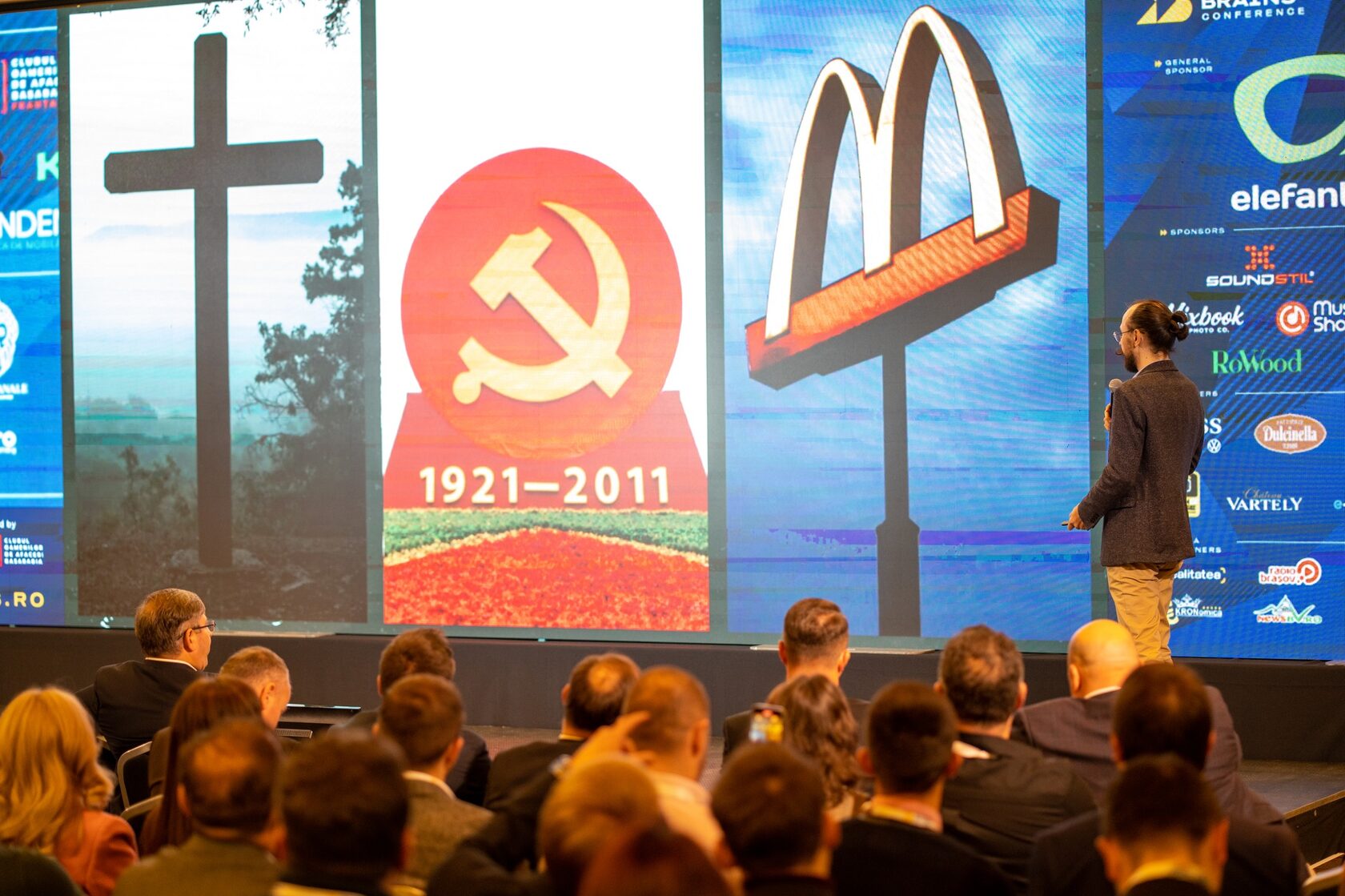
The following is a condensed and sharpened version of the speech "The Tribal Mind: How to build brands that rule the world" I first presented at the Business Brains Conference in 2022. It’s a direct refutation of the tactical fluff that dominates marketing in favor of a more pragmatic, effective approach.
A Strategic Framework for Tribal Branding
In any market flooded with parity products, stop obsessing over features—that’s a race to the bottom. The only real advantage is brand, but not as a feature-carrier. From a behavioral perspective, cultural relevance acts as an irrationally powerful signal of trust and belonging that a spec sheet can never replicate. The ultimate strategic goal, then, is not to build a better product, but to create a center of cultural gravity that makes the competition irrelevant.
The Engineering Fallacy vs. Psychological Reality
The core delusion of modern marketing is assuming the customer is an engineer. They are not. But the opposite camp, which insists the customer is a creature of pure emotion, is peddling equally dangerous nonsense. The reality is that they are neither. They are a primate looking for signals of safety, status, and belonging. While your product team celebrates a 10% increase in processing speed, your customer is subconsciously scanning for cultural cues that tell them "people like me buy this." This isn't irrationality; it's a different, more potent, form of logic that most marketing briefs, trapped on one side of this false dichotomy, are too functionally obsessed to acknowledge. To believe that a superior feature set is the key to victory is a trap, precisely because it is so logical.
The Non-Negotiable Codes of Belonging
A brand's ideology is useless if it's not codified. This isn't about having a pretty logo. It's about developing a set of non-negotiable assets—symbols, colors, rituals, a figurehead—that act as a uniform for your tribe. These codes are heuristics. They save the brain the effort of rational analysis and replace it with a gut feeling of "this is for me." They are the costly, hard-to-fake signals that separate a real tribe from a temporary fad. Without them, you have no brand, only a product waiting to be discounted.
Dunbar's Law: The Brutal Math of a Crowded Mind
The market isn't a shelf; it's a human mind with a brutally limited capacity for meaningful relationships. The theory of Dunbar's number puts a cap on our stable social connections at around 150. This dictates that your brand isn't just fighting for attention against Coca-Cola; it's fighting for a relational slot against your customer's spouse, their boss, and their dog. To earn one of those precious slots requires a value proposition so psychologically resonant that the brand becomes a meaningful part of their identity. It's a zero-sum game for a place at the family dinner table, and most brands don't even realize what game they're in.
Case Study: From Utility to Tribe (No Bullshit)
Look at the Moldova IT Park. Its critical failure wasn't its function, but its perception. To its audience, it was nothing more than a fiscal utility—a commodity whose only value was a tax incentive. They were boring and, therefore, vulnerable. The strategic pivot wasn't about uncovering some hidden truth; there wasn't one. It was about architecting an ideology from the ground up, giving them something they could stand for: 'a hub for innovators'. This new position was then codified. The result wasn't just a new logo. It was a quantifiable shift in member behavior—from passive users to active advocates. This, in turn, gave them leverage with the government and press, drove an increase in awareness and consideration, and fueled more dynamic growth than before. That's not just brand-building; that's building power.
So, forget your content calendars and engagement hacks. That's marketing's equivalent of rearranging deck chairs on the Titanic. The only work that matters is the hard, strategic task of building a tribe. Define your ideology. Codify it. And understand the psychological battlefield you're actually fighting on. Anything else is a waste of time and money.
Watch the Full Argument
The principles outlined here are just the framework. To see the full, unfiltered presentation, including a more detailed breakdown of the case studies and the underlying psychology, watch the original speech from the Business Brains Conference.