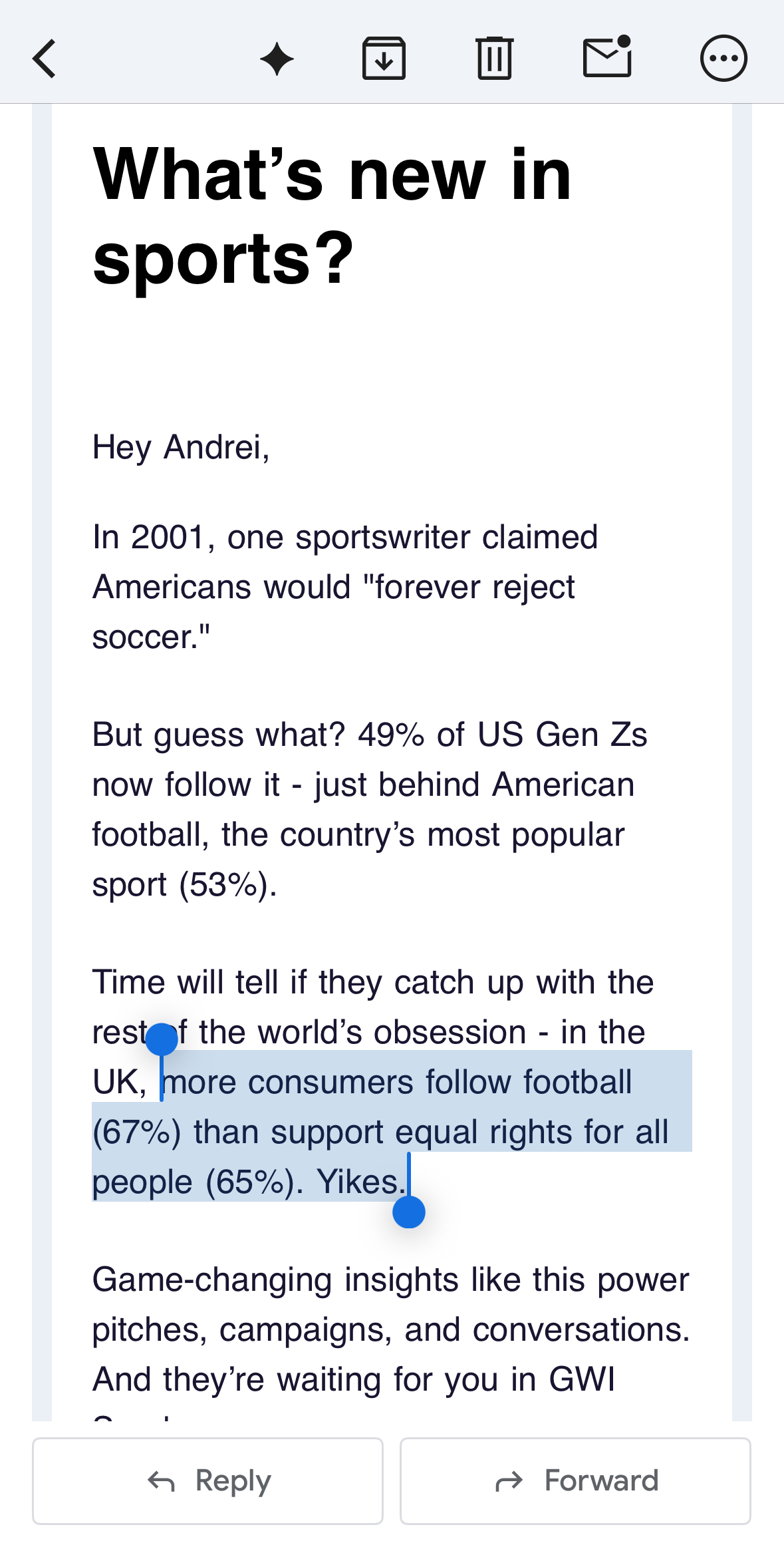


There’s a peculiar genius in the way GWI chose to present its latest consumer insights. The original newsletter highlights a juxtaposition that is as uncomfortable as it is effective: "in the UK, more consumers follow football (67%) than support equal rights for all people (65%). Yikes.". That’s not just a statistic; it’s a masterstroke of brand communication, a rhetorical slap—a deliberate collision of passion and principle.
This is not your garden-variety data visualization. GWI’s approach is a textbook case of what behavioral economics pioneer Daniel Kahneman described as the power of context and framing. By placing a sobering social metric directly alongside the fever pitch of football fandom, they force the reader into what Kahneman would call “System 2” thinking—reflection, discomfort, and, crucially, attention. The contrast is not incidental; it’s the message.
From the perspective of marketing effectiveness and brand building, Les Binet and Peter Field’s work is particularly relevant here. They have shown that the most effective communications are those that generate a strong emotional response—a cornerstone of emotional branding—and create "fame." By provoking a sharp emotional reaction to the statistic itself, GWI creates the raw material for conversation. That discussion—about the insight and the brand that delivered it—is what ultimately builds fame.
This is not about being louder. It’s about being strategically disruptive—using contrast to make the familiar strange and the ignored impossible to overlook. In a world where most marketing communications strive for seamlessness, it’s the well-placed rupture that commands attention and, occasionally, provokes change.
As Rory Sutherland reminds us, the context in which information is delivered is often as important as the information itself. GWI’s move is a masterclass in owning the context: the fire exit question at the concert, the inconvenient truth at the heart of the spectacle. It is, in short, clickbait for people who should know better—and that’s precisely why it works.